
When we test a transformer differential relay for transformer protection, we need to know the differential stable condition. Specifically, the current magnitudes and angles of both sides of the transformer. Otherwise, we can not test the differential protection properly. That’s why understanding the differential stability condition for different transformers is very important. In this blog, we will discuss the stability condition of various vector groups of transformers.
If you are not aware of transformer differential protection, then I will request you to read the article Transformer Differential Protection first.
Differential Stability Condition of Dyn1 Transformer
One of the most common transformers is the Dyn1 transformer. Consider a 132/33 KV Dyn1 Transformer, whose HV CT ratio is 800/1 and LV CT Ratio is 1600/1. To describe the stability condition, first draw the transformer’s three-phase winding connection with the CT. This figure is for the normal condition.
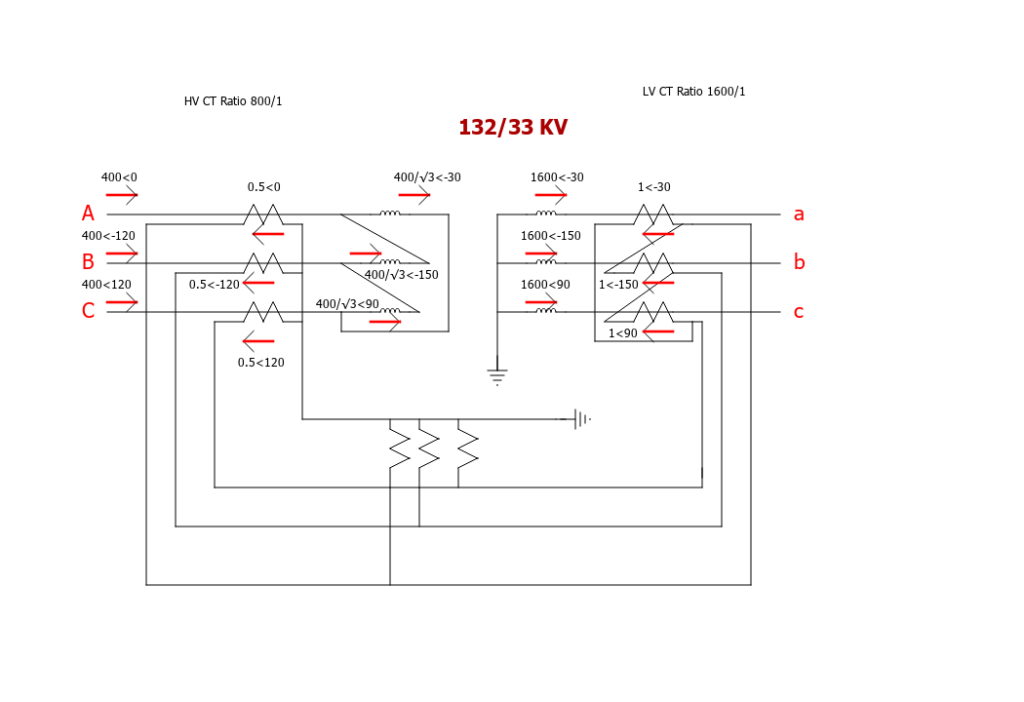
From Fig: 1, we see that when 400<0A current flows through the HV line. Then 400/√3<-30 A current flows through the HV delta winding phase. The LV winding line current will be 1600<-30 A. Here, the LV current flows out from the transformer. But during differential protection testing, the direction of the LV side current is also consider to the transformer. In Fig: 2, the direction of the LV side current is shown to the transformer.
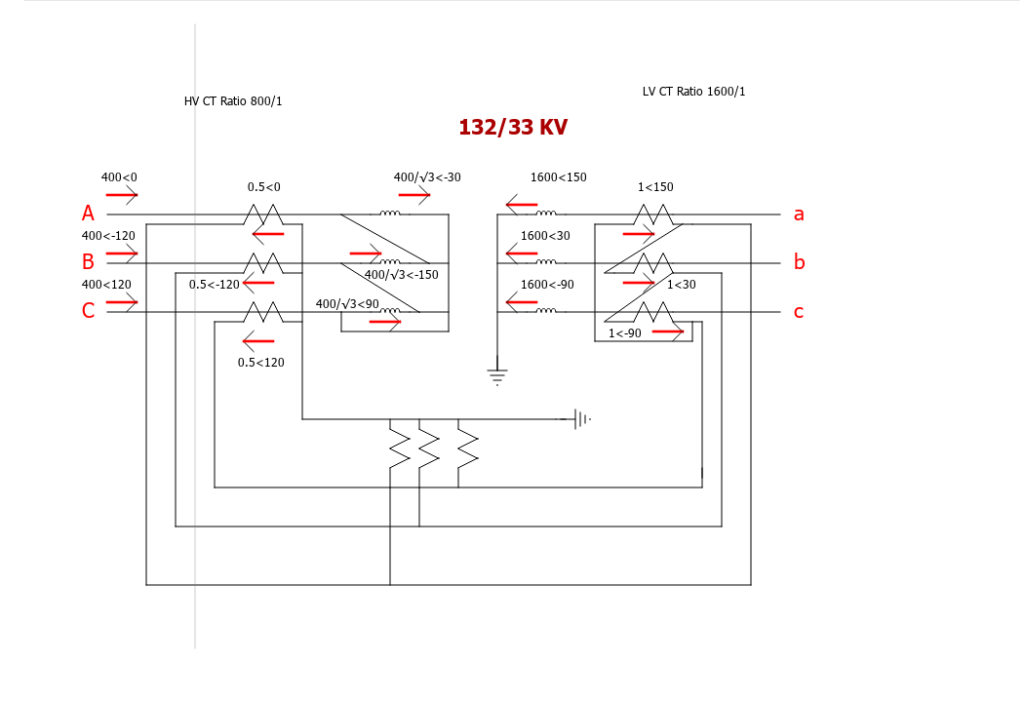
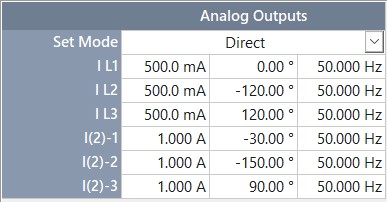
As the direction changes 180 degrees, so the phase angle also change 180 degrees. These current magnitudes and angles are injected into the differential relay, and the relay does not give any trip. If we use QuickCMC, then it looks like:
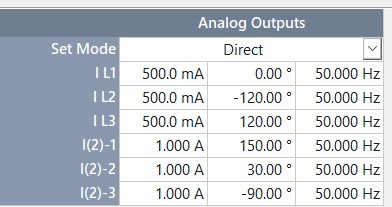
If we want to check the differential trip for this type of transformer, we need to change one side(HV or LV) phase angle by 180 degrees(at least one phase). Figures 4 and 5 are the differential tripping conditions for the Dyn1 transformer.
Differential Stability Condition of Dyn11 Transformer
The three-phase connection diagram of a Dyn11 transformer is:
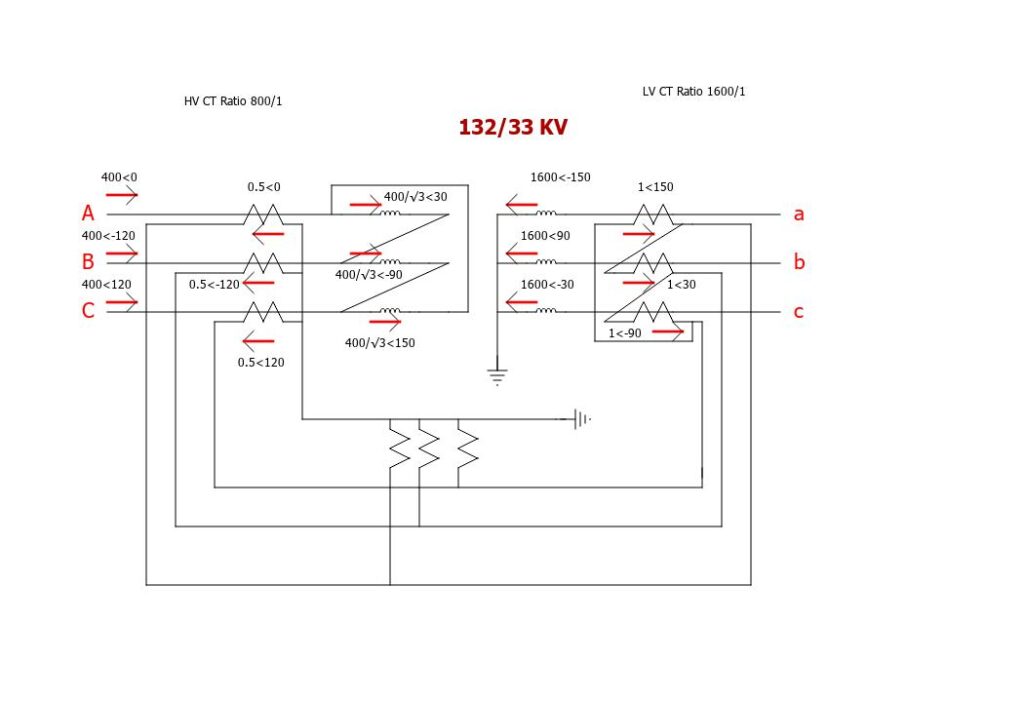
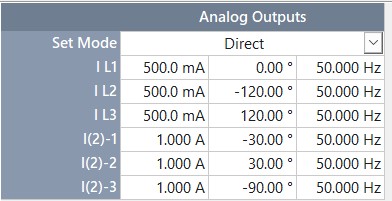
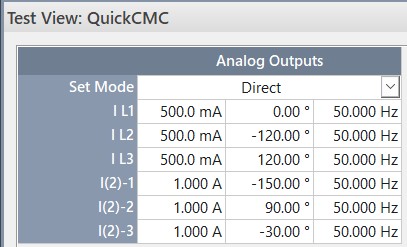
Fig: 6 shows the differential stable condition of a Dyn11 Transformer. In QuickCMC, the value looks like:
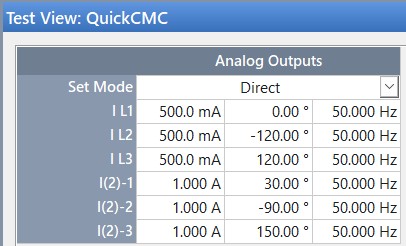
If we want to check the trip condition, then we should change the phase angle on one side( at least one phase) by 180 degrees.
Today we finish here, but this article is not complete yet. We will add for Ynd1, Ynd11, Ynaod1, and more. So, visit the Powersynchro website frequently.